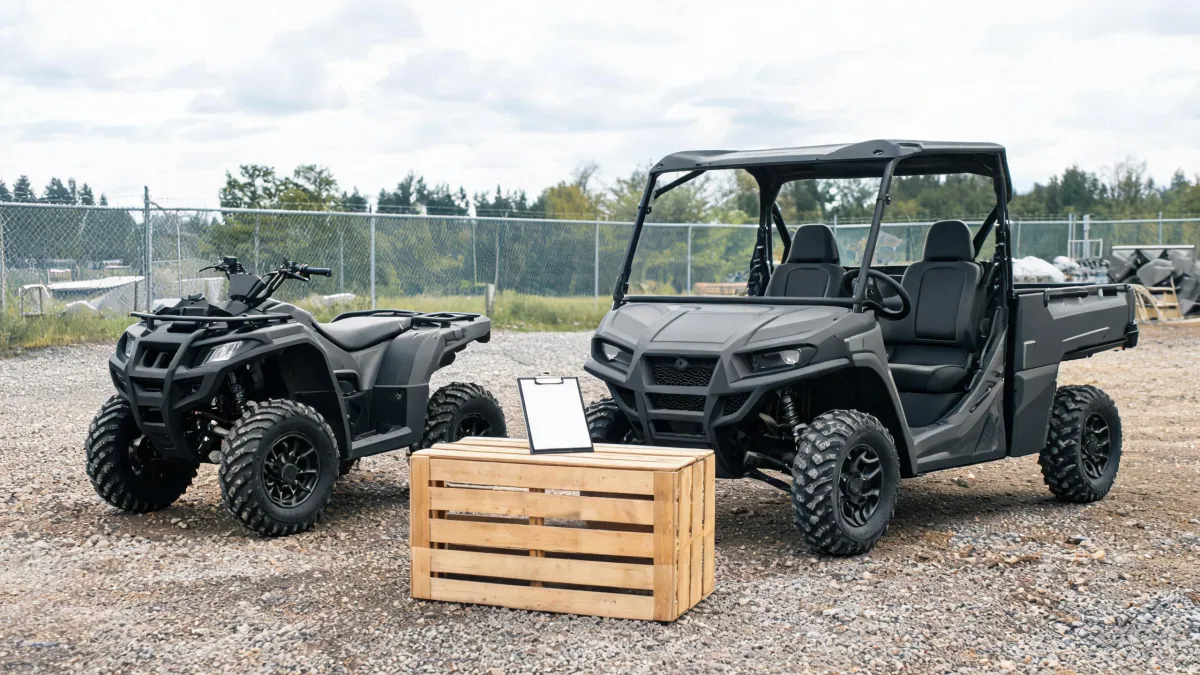
Imagine two 2025 Polaris Sportsman 850/XP 1000 units coming off the same trailer on a Friday afternoon. The first owner rides by feel for the weekend, parks it, and calls it broken in. The second straps an hour meter to the bars, keeps the opening three hours off full throttle and high speed, and books the 25-hour oil and filter service before the machine leaves the yard. Both quads feel identical in week one.
The difference shows up later, in belt life, clutch wear, and how much of the first season disappears into a repair bay. For this model, the break-in that protects the machine is a timed heat-and-fluid routine, not a vague month of gentle riding. Scope first: everything below is bound to the 2025 Polaris Sportsman 850/XP 1000 and the owner manual that covers it, not to ATVs as a class. That manual sets the break-in period at the first 25 hours of operation, or the time it takes to use the first two tanks of gasoline, and it states that careful treatment of a new engine and drive components results in more efficient performance and longer life.
Why the First Three Hours Are a Separate Risk
The first three hours are a heat problem, not a speed problem. Excessive heat build-up during the first three hours of operation will damage close-fitted engine parts and drive components, and the manual's instruction is direct: do not operate at full throttle or high speeds during that window. The cap exists because throttle and speed add heat to the engine and drive components faster than new, tightly fitted surfaces can shed it. Clearances are tightest when the parts are new, so the margin for extra heat is thinnest at exactly the moment a rider most wants to see what the machine can do.
Three hours is short on purpose. An hour count is a rule you can check against a meter; take it easy is not a rule at all. Heat damage does not announce itself on the trail either. It lands on the close-fitted parts and surfaces later as wear and lost performance, which is the reason the manual puts a number and a hard prohibition on the opening hours instead of leaving the call to rider judgment.
The 25-Hour Clock and Two-Tank Trigger
The break-in period on this model is the first 25 hours of operation, or the time it takes to use the first two tanks of gasoline. Two measures, one window, and the manual ties the whole period to both.
Hours and fuel track different things. Fuel burn follows load; operating hours follow time. Track only fuel fills and a lightly worked unit can pass 25 hours on its second tank without ever noticing that the service interval arrived. The reason the manual offers both is that neither one alone covers every use pattern, which makes an hour meter or a written hour log the practical clock, with fuel fills as a backstop rather than a schedule.
The Break-In Sequence in Working Order
Order the work by clock, not by feel. The opening three hours stay off full throttle and high speed. Slower speeds, light loads, no aggressive acceleration and no high-speed operation hold across the full 25-hour window. At 25 hours, change both the engine oil and filter. At 25 hours or 250 miles (400 km), whichever comes first, check transmission and all gearcase fluid levels.
The three-hour rule sits inside the 25-hour period, which means crossing hour three does not release the machine from the slower-speed and light-load limits, and it does not cancel the fluid tasks at the end. One window, a hard front edge, and a service tail. Treating hour three as the finish line is how an operator ends up with a quad that rode gently for an afternoon and then never got its 25-hour service at all.
Clutch and Belt Loads During Break-In
Riding soft while dragging a loaded trailer is not break-in. It only looks like it.
A proper break-in of the clutches and drive belt will ensure a longer life and better performance, and the manual applies the same slower-speed, light-load limits to those parts.
The reason comes down to contact. A belt and its clutch sheaves pass torque through a friction interface, and those surfaces have to take load gradually and repeatedly in order to seat evenly. Abrupt acceleration changes how much torque the belt pushes through a contact patch that is still establishing itself, so the first real loads land on the least-prepared part of the driveline.
Load and throttle are two separate limits, which is why the manual lists them side by side. A rider who keeps rpm low but hooks a trailer onto the hitch has still asked the belt to move that trailer's mass, and the demand reaches the belt no matter how gently the throttle was opened.
How to Confirm Each Break-In Step
Confirmation is a record, not a feeling. Oil level stays in the safe operating range, checked the way the Oil Level Check section describes, with the recommended oil added as needed. At 25 hours, replace the engine oil and filter. Then check transmission and all gearcase fluid levels at 25 hours or 250 miles, whichever comes first.
A safe oil level is not proof of the 25-hour oil change, which means the file needs two separate entries: one for the level check you performed and one dated line for the oil and filter swap. The driveline check carries its own trigger, the earlier of 25 hours or 250 miles, and it wants a written reading rather than a memory of somebody glancing at a case.
What Skipping the 25-Hour Service Risks
Suppose two identical 2025 Sportsman 850/XP 1000 units join the same fleet on the same morning. One gets the three-hour heat cap, an hour log, the 25-hour oil and filter service, and the gearcase check. The other gets ridden easy for a weekend, never gets a meter, and slides past 25 hours with no service line. Nothing in the manual predicts a failure rate for the second unit, and no one should pretend it does.
What the manual does say is directional. Careful treatment of a new engine and drive components results in more efficient performance and longer life for those components, and excessive heat in the first three hours can damage close-fitted parts. Put those two statements next to a fleet schedule and the trade is planned downtime against unplanned risk. The 25-hour oil and filter change is an hour in the shop you pick in advance; skipping it does not delete that hour, it moves the cost to a date you do not pick, usually on a machine that is needed that week.
The routine itself is a bounded, known cost. One oil change, one filter, a fluid level check on the transmission and gearcases, and an hour of attention. The alternative is unbounded and unknown, which is the worst combination for equipment that has to be in service on Monday.
Who Should Not Use This Routine
This routine is not for you if the machine is a different ATV, if it carries different installed equipment, or if your fleet will not log hours and will not complete a 25-hour service. The three-hour throttle and speed cap, the 25-hour oil change, and the gearcase fluid check at the 25-hour or 250-mile mark belong to the 2025 Polaris Sportsman 850/XP 1000 and the manual that covers it, and another machine needs its own book.
It is for the owner or fleet operator who will bolt on an hour meter, hold the opening hours inside the manual's limits, and book the service before the unit crosses 25 hours. Planned service now, or heat and wear risk later. That is the whole trade, and the front end is cheaper.
